Fictional Thinking
A Poetics and Rhetoric of fictional creativity in Theater
By Eli Rozik
A Poetics and Rhetoric of fictional creativity in Theater
By Eli Rozik

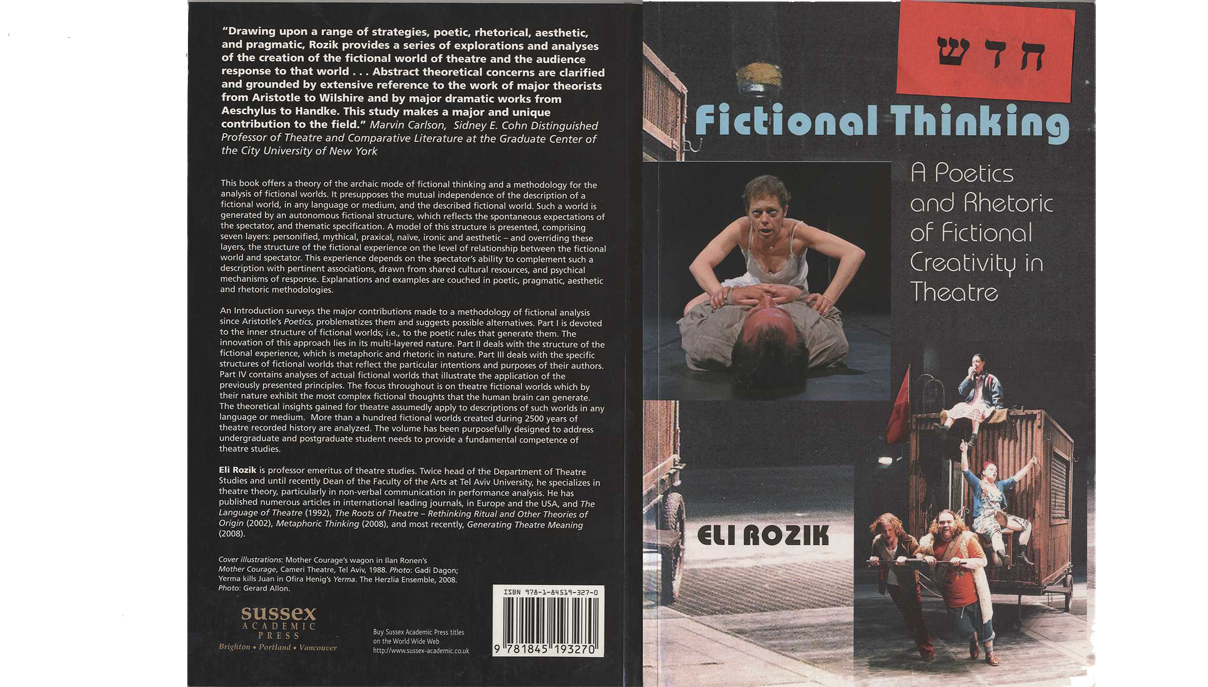
"Drawing upon a range of strategies, poetic, rhetorical, aesthetic, and pragmatic, Rozik provides a series of explorations and analyses of the creation of the fictional world of theatre and the audience response to that world . . . Abstract theoretical concerns are clarified and grounded by extensive reference to the work of major theorists from Aristotle to Wilshire and by major dramatic works from Aeschylus to Handke. This study makes a major and unique contribution to the field." Marvin Carlson, Sidney E. Cohn Distinguished Professor of Theatre and Comparative Literature at the Graduate Center of the City University of New York
This book offers a theory of the archaic mode of fictional thinking and a methodology for the analysis of fictional worlds.It presupposes the mutual independence of the description of a fictional world, in any language or medium, and the described fictional world. Such a world is generated by an autonomous fictional structure, which reflects the spontaneous expectations of the spectator, and thematic specification. A model of this structure is presented, comprising seven layers: personified, mythical, praxical, naive, ironic and aesthetic - and overriding these layers, the structure of the fictional experience on the level of relationship between the fictional world and spectator. This experience depends on the spectator's ability to complement such a description with pertinent associations, drawn from shared cultural resources, and psychical mechanisms of response. Explanations and examples are couched in poetic, pragmatic, aesthetic and rhetoric methodologies.
An Introduction surveys the major contributions made to a methodology of fictional analysis since Aristotle's Poetics, problematizes them and suggests possible alternatives. Part I is devoted to the inner structure of fictional worlds; i.e., to the poetic rules that generate them. The innovation of this approach lies in its multi-layered nature. Part II deals with the structure of the fictional experience, which is metaphoric and rhetoric in nature. Part III deals with the specific structures of fictional worlds that reflect the particular intentions and purposes of their authors. Part IV contains analyses of actual fictional worlds that illustrate the application of the previously presented principles. The focus throughout is on theatre fictional worlds which by their nature exhibit the most complex fictional thoughts that the human brain can generate The theoretical insights gained for theatre assumedly apply to descriptions of such worlds in any language or medium. More than a hundred fictional worlds created during 2500 years of theatre recorded history are analyzed. The volume has been purposefully designed to address undergraduate and postgraduate student needs to provide a fundamental competence of theatre studies.
Eli Rozik is professor emeritus of theatre studies. Twice head of the Department of Theatre Studies and until recently Dean of the Faculty of the Arts at Tel Aviv University, he specializes in theatre theory, particularly in non-verbal communication in performance analysis. He has published numerous articles in international leading journals, in Europe and the USA, and The Language of Theatre (1992), The Roots of Theatre - Rethinking Ritual and Other Theories of Origin (2002), Metaphoric Thinking (2008), and most recently. Generating Theatre Meaning (2008).